Mouldy Ceilings in Cairns – How They Should Be Treated Before Repainting
Mould on interior ceilings is a common problem in Cairns and throughout Far North Queensland.
Our warm, humid tropical climate creates ideal conditions for mould growth, particularly during the wet season. Bathrooms, laundries, bedrooms and rooms with limited ventilation can be especially susceptible.
One of the biggest mistakes when repainting a mould-affected ceiling is simply cleaning the visible mould and applying fresh ceiling paint.
Mould needs to be properly treated before repainting.
Why Does Mould Grow on Ceilings in Cairns?
Mould needs moisture to grow, and Far North Queensland provides plenty of it.
Common contributing factors include:
High humidity
Condensation
Poor ventilation
Bathrooms without adequate extraction
Air-conditioning and temperature differences
Roof or plumbing leaks
Rooms remaining closed for long periods
Wet-season conditions
Before repainting, it is important to consider why the mould developed in the first place.
If there is an active roof leak, plumbing problem or another source of excessive moisture, that issue should be repaired before painting.
Painting cannot fix the underlying cause of a moisture problem.
Cleaning Mould Is Not the Same as Killing It
Simply washing the ceiling until the black marks become less visible doesn't necessarily mean the mould has been properly treated.
The mould should first be treated with an appropriate mould treatment to kill it, followed by thorough cleaning of the ceiling.
Even after correct treatment and cleaning, some dark staining can remain visible.
This doesn't necessarily mean the treatment hasn't worked. Mould can leave staining and discolouration behind even after it has been properly treated and killed.
This is why simply cleaning a mouldy ceiling and applying another coat of ceiling paint isn't the preparation system I use.
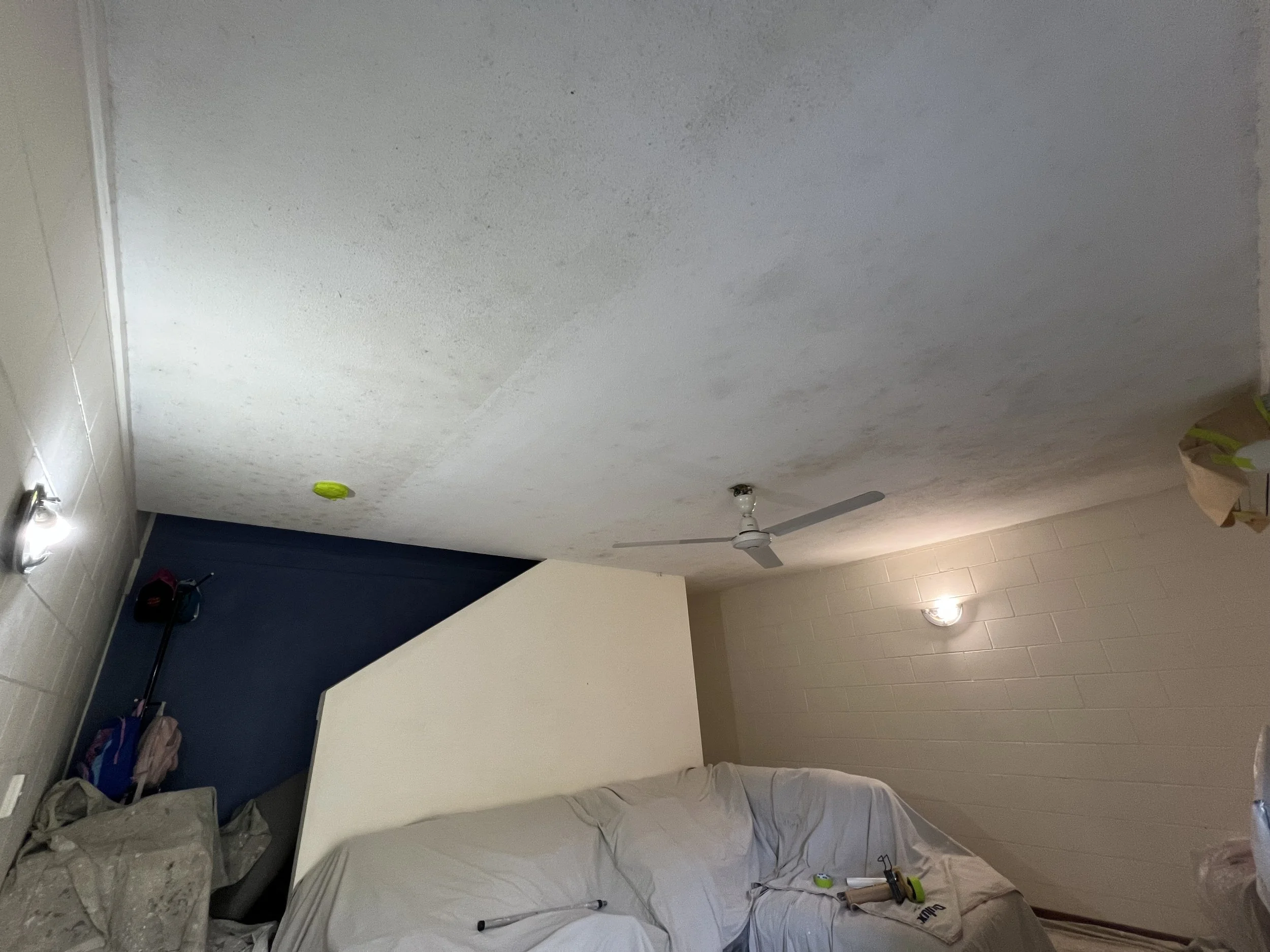
Why I Seal the Entire Ceiling Before Painting
Once the mould has been properly treated, the ceiling thoroughly cleaned and allowed to dry, some mould staining may still remain.
At Painting & Maintenance FNQ, for a mould-affected ceiling I don't simply spot-seal the areas where staining is visible.
I seal the entire ceiling with Dulux PRECISION Shellac Based Stain Blocker.
This provides a consistent sealed surface across the whole ceiling, blocks remaining staining and creates a suitable base before the finishing coats are applied.
My process is:
1. Properly treat the mould to kill it
↓
2. Thoroughly clean the entire ceiling
↓
3. Allow the surface to dry
↓
4. Seal the entire ceiling with Dulux PRECISION Shellac Based Stain Blocker
↓
5. Apply mould-resistant finishing paint
The finished ceiling may look simple and clean, but achieving that result depends heavily on what happens underneath the final coats.
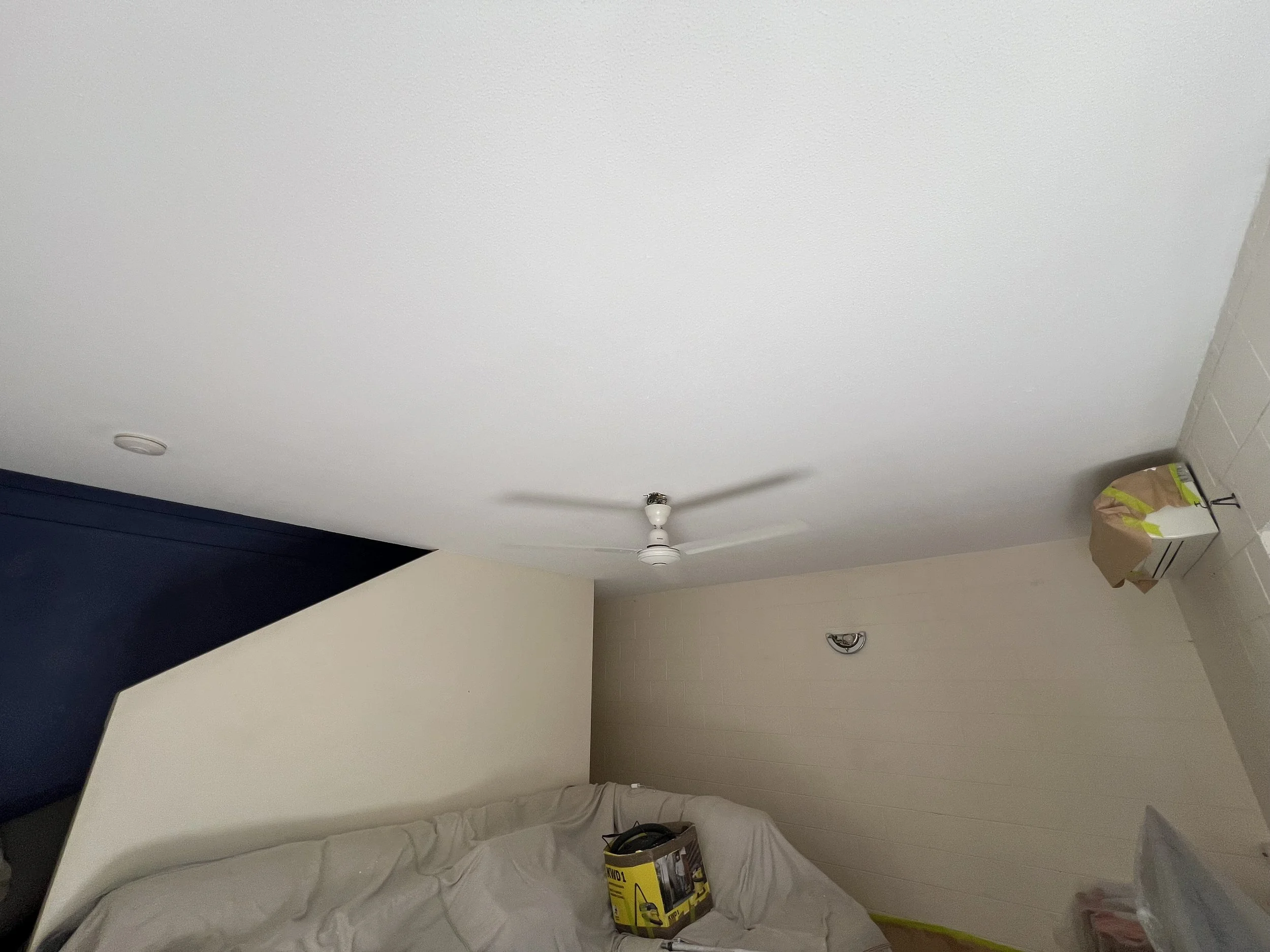
Why Not Simply Paint Over the Stains?
Applying ordinary ceiling paint directly over remaining mould staining may initially improve the appearance, but standard water-based ceiling paint isn't designed to reliably block severe staining.
Discolouration can potentially show through the new coating.
That's why I use a dedicated shellac-based stain-blocking sealer across the entire ceiling before applying the finishing paint.
The quality of the finished paintwork depends on proper preparation underneath it.
Why I Use Mould-Resistant Paint
Living and working in Far North Queensland means dealing with a warm, humid environment for much of the year.
For this reason, I use mould-resistant paint for interior ceiling work as standard at Painting & Maintenance FNQ.
I consider this an important part of the painting system in our tropical climate rather than an optional extra.
Mould-resistant paint provides additional protection against mould growth and gives the freshly prepared ceiling a finish better suited to Far North Queensland conditions.
However, mould-resistant doesn't mean mould-proof.
If excessive humidity, condensation, poor ventilation or water ingress continues, mould can eventually return regardless of the quality of the paint.
Why I Recommend Low Sheen Paint for Bathroom Ceilings
Bathrooms require particular attention because their ceilings are regularly exposed to steam, condensation and high humidity.
For this reason, I highly recommend avoiding regular flat ceiling paint on bathroom ceilings.
At Painting & Maintenance FNQ, I use a mould-resistant low sheen paint for bathroom ceilings.
Low sheen provides a more durable and washable surface, making it better suited to humid areas where condensation and mould can be an ongoing concern.
Regular flat ceiling paint can be perfectly suitable for dry areas such as bedrooms and living rooms, but bathrooms are different. Their ceilings need to cope with considerably more moisture and may require cleaning more regularly.
In Cairns' tropical climate, mould-resistant low-sheen paint is my preferred choice for bathroom ceilings.
Will Repainting Stop Mould Coming Back?
Not necessarily.
Proper mould treatment, full-ceiling sealing and mould-resistant finishing paint provide a much better painting system, but they cannot eliminate the environmental conditions that caused mould to develop in the first place.
Homeowners can help reduce the risk by:
Using bathroom exhaust fans
Improving ventilation
Using air-conditioning or dehumidification where appropriate
Addressing roof or plumbing leaks promptly
Allowing bathrooms to dry after showers
Keeping rooms ventilated during humid periods
In Far North Queensland, managing humidity and moisture is particularly important.
A good painting system helps, but controlling the conditions that encourage mould growth is equally important.
What About Bathroom Ventilation?
An effective exhaust fan can make a significant difference in reducing moisture and condensation.
However, the fan needs to remove humid air effectively rather than simply being switched on briefly while someone showers.
If a bathroom ceiling repeatedly develops mould shortly after cleaning or repainting, it is worth investigating the ventilation and moisture levels rather than repeatedly repainting the ceiling.
The underlying cause should always be considered.
What If the Mould Was Caused by a Roof or Plumbing Leak?
This needs to be dealt with differently.
If water is entering through the roof, plumbing or another building defect, the source of the moisture needs to be repaired before painting begins.
The ceiling then needs sufficient time to dry.
Depending on the extent of the damage, plasterboard or other materials may also require repair or replacement before painting.
Painting over an active moisture problem will not solve it.
How Long Does It Take to Treat and Repaint a Mouldy Ceiling?
For a small room with a standard-height ceiling, it is normally possible to complete the entire process in one day, depending on the condition of the ceiling and how quickly the treated and cleaned surface dries.
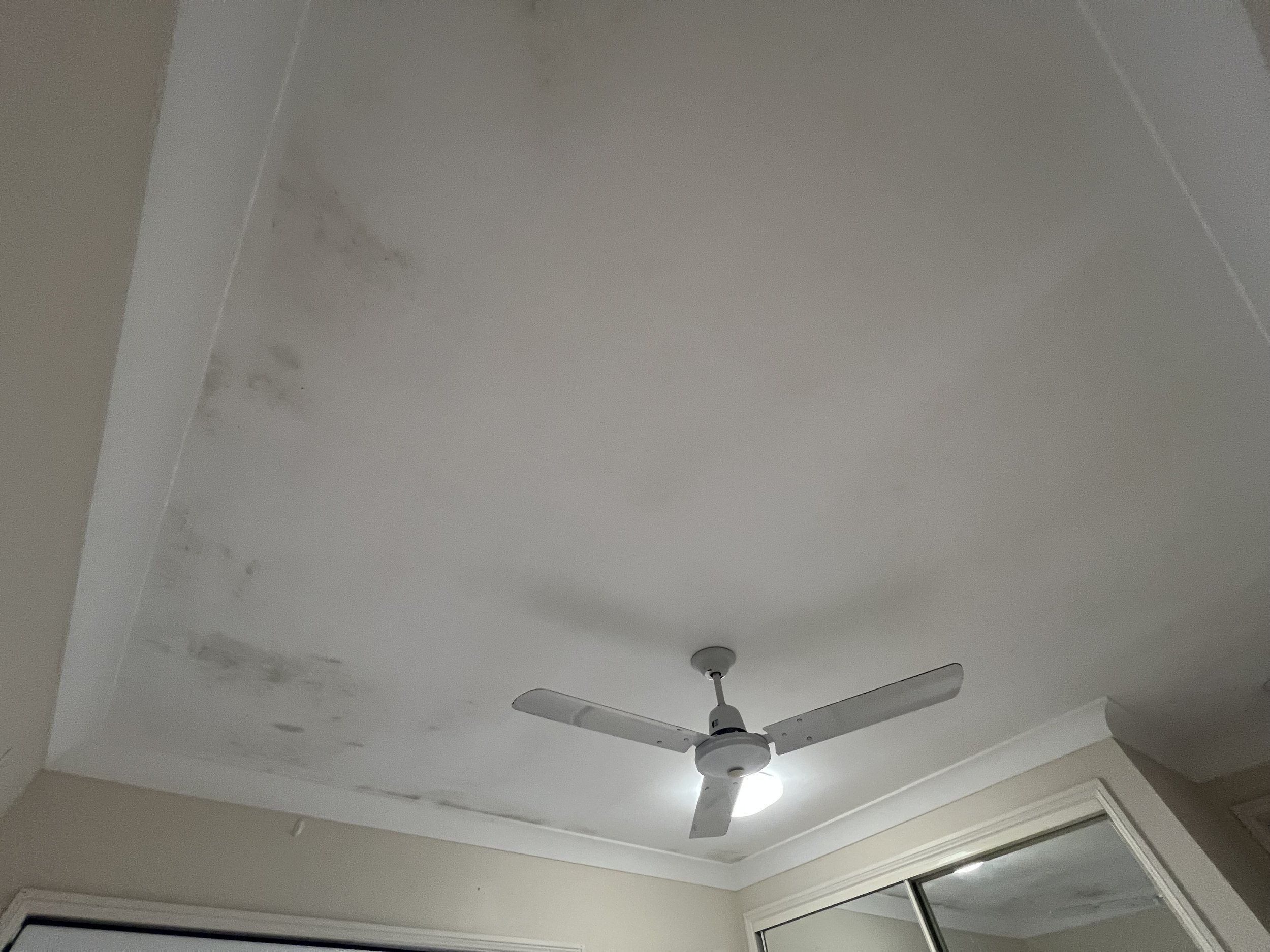
A typical job can include:
Mould treatment
Thorough cleaning
Surface preparation
Sealing the entire ceiling with Dulux PRECISION Shellac Based Stain Blocker
Applying mould-resistant finishing paint
Larger rooms, high ceilings, severe mould contamination, extensive repairs or moisture problems may require additional time.
Every ceiling is different, so the condition of the existing surface needs to be assessed before work begins.
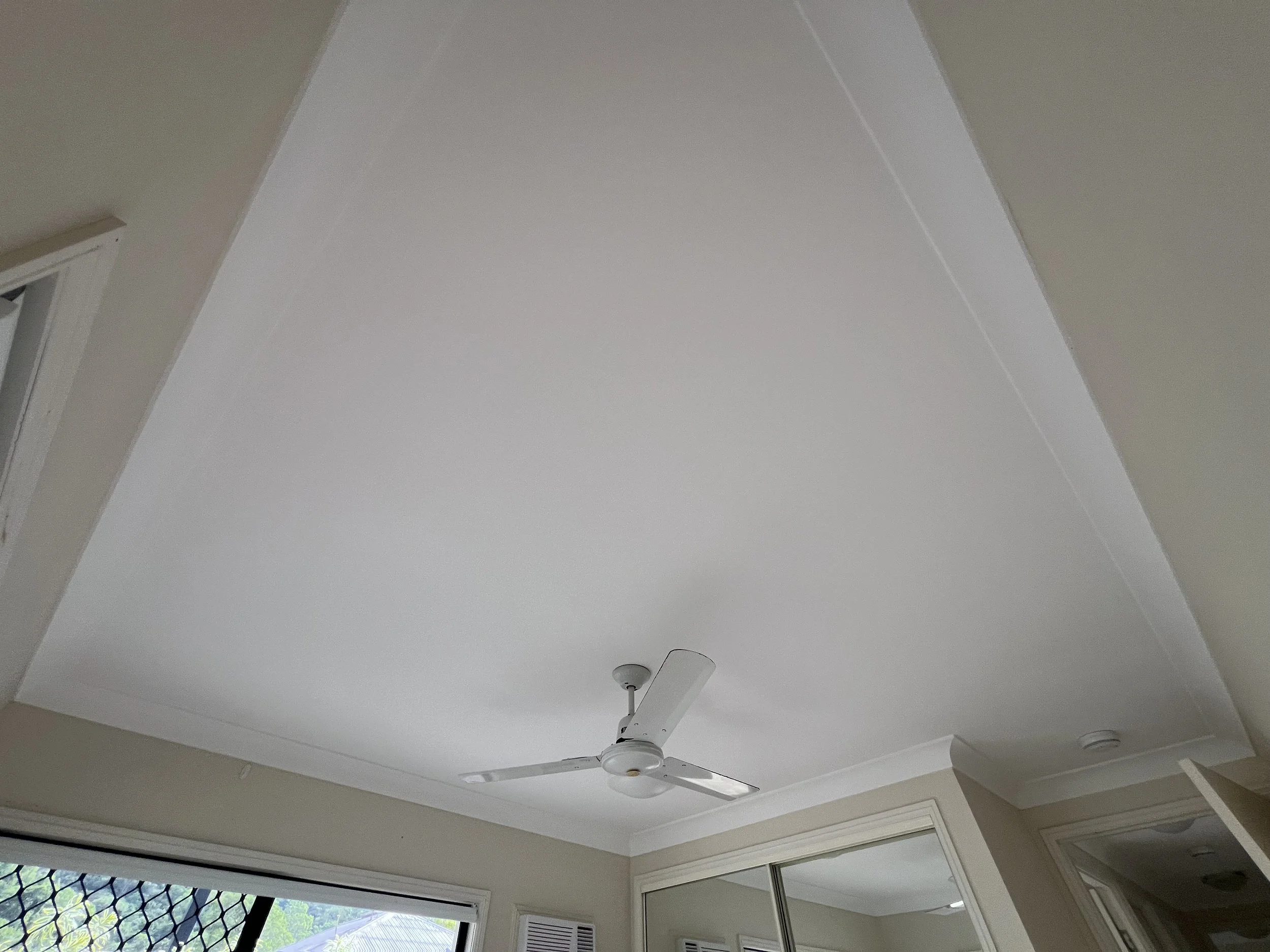
Why Professional Preparation Matters
When you look at a freshly painted white ceiling, you only see the final result.
Most of the important work has already happened underneath.
With a mould-affected ceiling, professional preparation can involve treating the mould, thoroughly cleaning the surface, allowing it to dry, sealing the entire ceiling and only then applying mould-resistant finishing paint.
At Painting & Maintenance FNQ, I use professional Dulux preparation and painting systems rather than simply covering stains with another coat of paint.
The objective isn't just to make the ceiling white again.
It's to properly treat, prepare and seal the existing surface before repainting it.
Mouldy Ceiling in Cairns?
If you have mould, staining or water marks on an interior ceiling, Painting & Maintenance FNQ can assess its condition and determine what preparation is required before repainting.
Sometimes the problem is relatively straightforward, and a small, standard-height ceiling can be treated, sealed and repainted within one day.
If there is an underlying moisture problem, however, that should be addressed before painting proceeds.
Painting & Maintenance FNQ provides professional interior painting services throughout Cairns, Northern Beaches, Port Douglas, Mossman and surrounding areas.
Owner-operated, QBCC licensed and fully insured. Free, no-obligation quotations.
Frequently Asked Questions:
Can you paint directly over mould?
No. Mould should first be properly treated to kill it. The ceiling should then be thoroughly cleaned and allowed to dry before sealing and repainting.
Why can I still see black marks after mould treatment?
Even after mould has been successfully treated and killed, staining and discolouration can remain. Visible staining doesn't necessarily mean the treatment hasn't worked.
Why do you seal the entire ceiling instead of only the stains?
I seal the entire ceiling to provide a consistent sealed surface and isolate remaining staining before the finishing coats are applied.
What sealer do you use?
For mould-affected ceilings, I use Dulux PRECISION Shellac-Based Stain Blocker across the entire ceiling before applying the finishing paint.
Do you use mould-resistant paint?
Yes. I use mould-resistant finishing paint for interior ceiling work as standard. In Far North Queensland's humid tropical climate, I consider this an important part of the painting system.
Should flat ceiling paint be used in a bathroom?
I highly recommend avoiding regular flat ceiling paint on bathroom ceilings. I prefer mould-resistant low sheen paint, which provides a more durable and washable finish better suited to the moisture and humidity found in bathrooms.
Can a mouldy ceiling be treated and repainted in one day?
In many cases, yes. A small room with a standard-height ceiling can normally be treated, cleaned, sealed and repainted within one day, provided there are no significant repairs or ongoing moisture problems and the surface dries sufficiently.
Will mould-resistant paint stop mould permanently?
No. Mould-resistant paint provides additional protection, but it cannot overcome persistent moisture, high humidity, condensation, leaks or inadequate ventilation. If those conditions continue, mould can eventually return.
What if the mould was caused by a roof leak?
The leak should be repaired first. The ceiling must then be allowed to dry properly, and any damaged material should be assessed before painting begins.